
When you're dealing with the tingling, numbness, and grip weakness that carpal tunnel syndrome brings, it’s easy to feel frustrated and wonder where to turn for help in Hershey. The good news is that a range of effective treatment options is available, from simple changes you can make at home to non-surgical chiropractic care and, for more stubborn cases, medical interventions.
For most of our patients here in Hershey, PA, starting with a conservative, patient-focused game plan is the smartest and most effective way to find lasting relief. At Hershey Family Chiropractic, we focus on helping you get back to using your hands without pain through ergonomics, splinting, and targeted hands-on therapy designed to address the root cause of your symptoms.
Your First Step Toward Lasting Carpal Tunnel Relief in Hershey
That pins-and-needles feeling waking you up at night? The annoying weakness when you try to open a jar? This is the daily reality for millions of people with carpal tunnel syndrome (CTS). If you're searching for a "chiropractor near me" for carpal tunnel relief in Hershey, you're definitely not alone.
Globally, a staggering 14.4% of the population deals with CTS. The numbers are even higher in North America, where the prevalence hits 16.9% in high-income countries. These aren’t just abstract statistics; they represent real people in our community struggling with a condition that impacts their work, hobbies, and quality of life. You can learn more about these global CTS findings to see just how widespread this issue is.
At Hershey Family Chiropractic, we understand. Your goal is to return to your life without pain holding you back, and we're the trusted local provider committed to helping you achieve that. Our approach centers on non-surgical solutions that get to the root cause of the nerve pressure, rather than just temporarily masking the symptoms.
A Clear Path to Recovery
Figuring out the right treatment can feel overwhelming, but it usually follows a logical path, starting with the least invasive options first. This visual guide lays out the typical journey to finding relief from carpal tunnel syndrome.
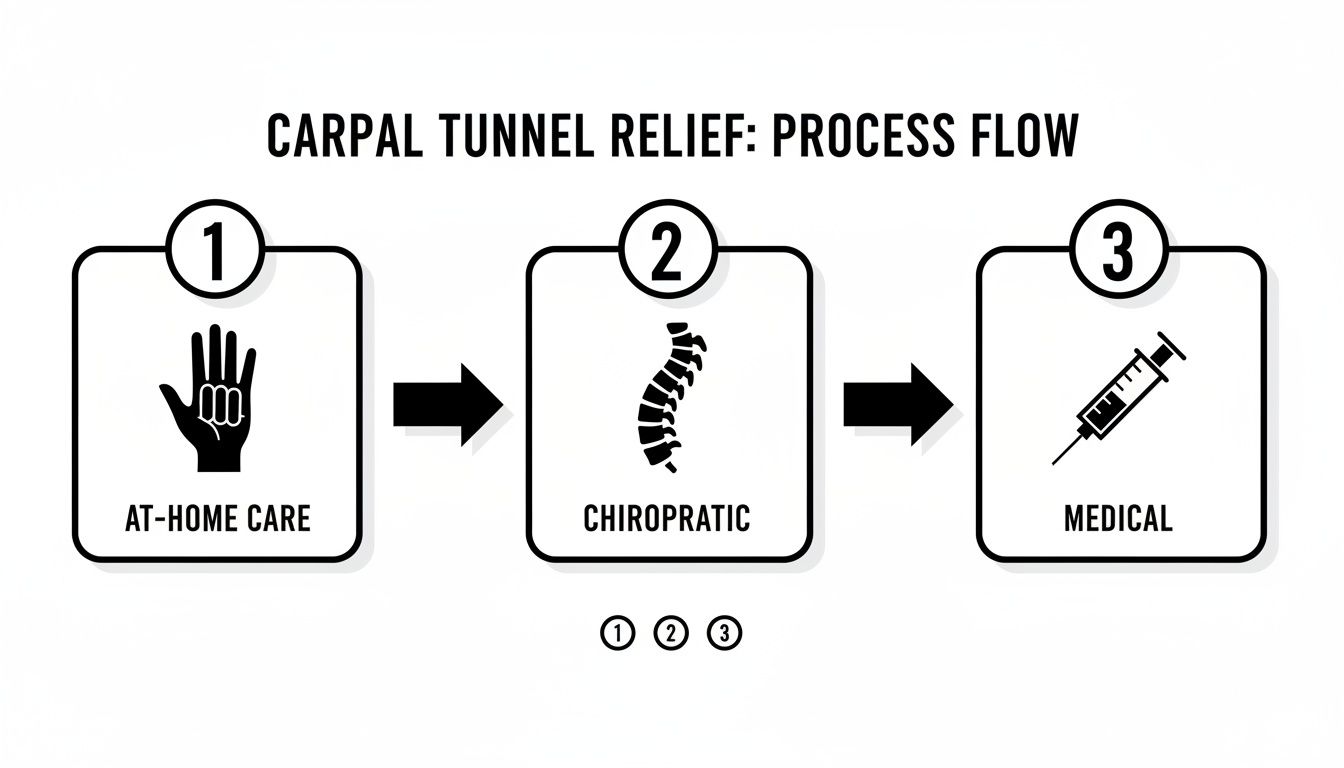
As you can see, a successful recovery often begins with simple at-home care and conservative treatments like chiropractic. For many people in the Hershey area, these first steps are all that's needed to resolve the problem for good.
Overview of Carpal Tunnel Treatment Approaches
To give you a quick roadmap of what’s available, this table summarizes the main treatment categories, moving from the least to the most invasive.
| Treatment Category | Primary Goal | Best For |
|---|---|---|
| At-Home & Self-Care | Reduce inflammation and avoid aggravating activities | Mild, early-stage symptoms or flare-ups |
| Non-Surgical & Conservative | Correct underlying joint/tissue issues to free the nerve | Mild to moderate cases; those avoiding surgery |
| Medical Interventions | Quickly reduce severe inflammation or permanently create space | Moderate to severe cases that haven't responded to other care |
This framework helps you see where different therapies fit and why starting conservatively is often the best first move.
What to Expect From This Guide
Think of this guide as your trusted local resource for understanding CTS. We’ll break down everything you need to know in a clear, straightforward way so you can make informed decisions about your health. Our goal is to empower you with knowledge and show you how our patient-first approach can help you find lasting relief, right here at our Hershey clinic.
Here's a quick look at what we’ll cover:
- Understanding the Cause: We'll dive into what’s actually happening inside your wrist that’s causing the pain.
- At-Home Strategies: You'll discover effective things you can start doing right now to ease your symptoms.
- Non-Surgical Chiropractic Care: Learn how our specific, hands-on treatments can take pressure off the nerve.
- Medical and Surgical Options: We’ll give you an honest look at injections and surgery for more severe cases.
Understanding What Is Happening Inside Your Wrist
To find the right treatment options, it helps to first understand what’s actually causing the pain, numbness, and tingling in your hand. The easiest way to picture it is to think of a garden hose. When the hose gets kinked or pinched, the flow of water stops. Something very similar is happening inside your wrist.
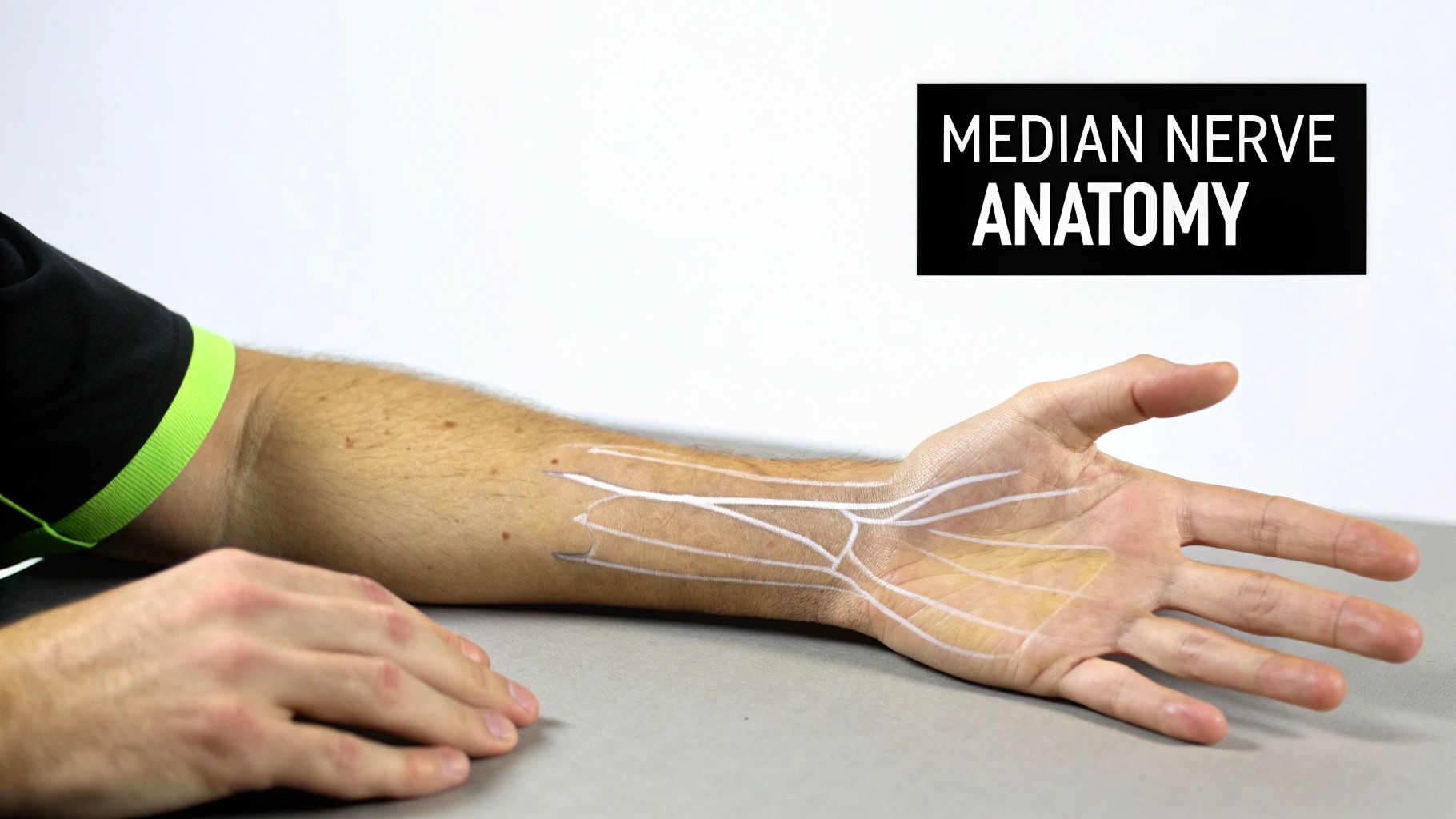
A major nerve called the median nerve runs from your forearm down into your hand. It has to pass through a very narrow, rigid passageway at the base of your palm known as the carpal tunnel. This tunnel is formed by small wrist bones on the bottom and a tough ligament stretched across the top.
This nerve is a big deal—it provides the feeling in your thumb, index, middle, and half of your ring finger. It also controls the small muscles that allow you to pinch and grip. When that tunnel gets crowded for any reason, the median nerve gets squeezed, and that’s when the trouble starts.
Why Does The Tunnel Get Crowded?
The pressure inside the carpal tunnel rarely increases because of just one thing. More often, it’s a combination of factors that build up over time. As your local Hershey chiropractor, our job is to help you figure out these triggers to find lasting relief.
Common contributors often include:
- Repetitive Hand and Wrist Motions: Think typing, using a computer mouse for hours, or working with vibrating tools. These activities can inflame the tendons that share the tunnel with the median nerve, leaving less room.
- Underlying Health Conditions: Things like diabetes, thyroid problems, and rheumatoid arthritis can cause system-wide inflammation or fluid retention, which narrows the space in the wrist.
- Wrist Anatomy: Some people are just born with a smaller carpal tunnel, making them more susceptible to nerve compression from even minor swelling.
- Pregnancy: The hormonal changes and fluid retention common during pregnancy are notorious for causing temporary carpal tunnel symptoms. We offer specialized prenatal chiropractic care to help manage this.
- Previous Injuries: A wrist fracture or dislocation from years ago can change the tunnel's anatomy, creating pressure on the nerve long after the injury has healed. This is similar to what we see with an auto injury chiropractor patient.
Connecting your daily habits and health history to these causes is the first step toward building a targeted, effective treatment plan.
Decoding Your Symptoms
Carpal tunnel syndrome is sneaky. It usually starts so gradually that it’s easy to write off the symptoms at first. But as the compression on the median nerve gets worse, the signals from your body get louder and harder to ignore.
You’ll probably notice a distinct pattern. The symptoms often flare up at night or after you’ve been holding your wrist in the same position for a while, like when driving or holding a phone.
Early intervention is key. When symptoms are addressed before they become severe, conservative treatments are often highly effective, helping our patients avoid more invasive procedures down the road.
The progression usually follows a pretty predictable path:
- Initial Numbness and Tingling: It might start as a "pins-and-needles" feeling in your thumb, index, middle, or ring fingers. Many people in Hershey find themselves waking up and needing to "shake out" their hands to get relief.
- Radiating Pain: The discomfort can start traveling from your wrist up into your forearm. It might feel like a dull, persistent ache or even a sharp, shooting pain.
- Weakness and Clumsiness: As the condition advances, you might start losing your grip. Dropping your coffee cup or fumbling with your keys become frustratingly common.
- Muscle Wasting: In severe, chronic cases, you might notice the muscles at the base of your thumb looking smaller. This is called atrophy, and it happens when the muscle stops getting proper signals from the pinched nerve.
If this progression sounds familiar, it's a clear sign from your body that it's time to listen. Now that you understand the "what" and the "why," you’re in a much better position to explore the treatment options that will bring you relief.
Finding Relief With At-Home Conservative Treatments
For many people in Hershey dealing with the first signs of carpal tunnel, the path to feeling better often starts right at home. These practical, conservative strategies are your first line of defense, designed to calm down the irritation and give that crowded median nerve some much-needed breathing room. By making a few small but meaningful changes, you can often dial down the pain significantly and keep the problem from escalating.

The idea behind at-home care is simple: stop doing the things that are aggravating the nerve. While that sounds easy enough, it takes a conscious effort to spot and change the daily habits that are contributing to the squeeze. These strategies manage immediate symptoms and also create a better environment for healing, setting the stage for professional chiropractic care that can address the underlying mechanical issues.
Ergonomic and Activity Modifications
Your daily environment and how you move within it play a massive role in carpal tunnel. Making a few smart adjustments can offer almost immediate relief by easing the constant strain on your wrists.
Take a hard look at your workstation. Is your keyboard forcing your wrists into an awkward, bent position? Small tweaks, like adding a wrist rest or adjusting your chair height to keep your forearms parallel to the floor, can make a world of difference. The main goal is to maintain a neutral wrist position—perfectly straight, not bent up or down—as much as you possibly can.
This same logic applies to everything else you do. Whether you're in the garden, knitting, or using power tools, it's so important to take frequent breaks. Set a timer on your phone to remind you to stand up, stretch your hands, and shake out your wrists every 30-45 minutes. These little micro-breaks are key to disrupting the cycle of repetitive strain that leads to nerve compression.
The Power of Nighttime Splinting
If you're waking up with numb, tingling hands, you're not alone—it's a classic sign of carpal tunnel syndrome. This often happens because many of us unknowingly sleep with our wrists curled into a tight ball, which pinches the median nerve for hours on end.
A simple wrist splint or brace is an incredibly effective tool for stopping this.
Wearing a brace at night keeps your wrist in a neutral, straight position. This simple act maximizes the space within the carpal tunnel, giving the compressed median nerve a much-needed break from the constant pressure.
This long, uninterrupted period of rest can dramatically reduce those frustrating nighttime and morning symptoms. You don't need a super restrictive or tight brace; a basic, over-the-counter splint that provides firm, comfortable support is often all it takes to see a real improvement.
Gentle Stretches and Nerve Gliding Exercises
Just like you'd stretch a tight muscle, specific exercises can help improve the flexibility of the tendons and ligaments around your wrist. Even more importantly, nerve gliding exercises are designed to help the median nerve move more freely within the carpal tunnel, breaking up any minor adhesions that might be "sticking" it in place.
Here are a few simple movements you can try throughout the day:
- Wrist Flexor Stretch: Extend one arm out in front of you, palm facing up. With your other hand, gently bend your wrist downward until you feel a light stretch. Hold for 20-30 seconds.
- Prayer Stretch: Press your palms together in front of your chest as if in prayer. Slowly lower your hands toward your waistline, keeping your palms together, until you feel a gentle stretch in your forearms.
- Median Nerve Glide: Start by making a loose fist. Then, slowly extend your fingers and thumb straight out. Gently bend your wrist back, then extend your thumb away from your palm. Hold each position for just a few seconds.
These movements should always be slow and gentle. If you feel any sharp pain, back off immediately. Consistency is far more important than intensity. Building these into your daily routine can help maintain mobility and fight stiffness. For those looking to build strength as their recovery progresses, we offer a selection of helpful tools, and you can learn more about our wrist strengtheners on our website.
While over-the-counter anti-inflammatory meds can offer temporary pain control, they're best seen as a short-term fix. They might help manage a flare-up, but they don’t correct the underlying biomechanical problem. These at-home strategies are a powerful start, but if your symptoms hang around, it’s a clear sign that you may need professional, hands-on chiropractic care to fully resolve the issue.
How Our Hershey Chiropractor Offers Non-Surgical Relief
When you’ve tried all the at-home tricks and the tingling in your hands still won’t quit, it’s a clear sign that the problem runs deeper than just your wrist. This is where we step in. At Hershey Family Chiropractic, we offer real, non-surgical solutions for carpal tunnel that get to the root of the nerve pressure. Our hands-on, patient-first approach helps Hershey residents find lasting relief without ever needing injections or surgery.
Our method is different because we look at the whole picture. The nerves that control your hand don’t magically start at your wrist—they travel all the way from your neck. A misalignment in the spine can easily cause neck pain, back pain, or even symptoms that feel like sciatica. That’s why our doctors, Dr. Davis, Dr. Epstein, and Dr. Tressler, will check your neck, shoulder, and elbow, too. We want to find every single spot where that nerve might be getting pinched along its path.

Gentle Adjustments To Restore Proper Function
The heart of our treatment is gentle, precise chiropractic adjustments. The goal is simple: restore normal movement to the small carpal bones in your wrist and any stuck joints in your arm or neck that are contributing to the problem. Proper spinal alignment is key to overall nerve function.
Think of it like unjamming a stuck gear. When joints get misaligned, they can’t move freely, which causes inflammation and puts pressure on nearby nerves. By gently nudging these areas back into motion, we can take that squeeze off the median nerve, allowing it to finally breathe and function without irritation. This is key to stopping that frustrating tingling and numbness. You can learn more about how chiropractic helps with numbness and tingling in our detailed guide.
Customized Rehabilitation and Soft Tissue Therapy
Getting your joints moving correctly is a huge step, but it’s only one part of the solution. To make sure the relief lasts, we also have to address the muscles and soft tissues that support your wrist and forearm. That’s what our custom rehab programs are for.
We’ll walk you through specific exercises designed to:
- Strengthen the muscles that support your hand and forearm.
- Improve your daily movement patterns to avoid future strain.
- Increase your flexibility and ease muscle tension.
Alongside rehab, we use advanced soft tissue therapies to speed up your recovery. Therapeutic massage helps break down stubborn scar tissue and calm inflammation. For really persistent cases, our state-of-the-art shockwave therapy uses acoustic waves to kickstart blood flow and trigger your body’s own tissue regeneration process.
Our integrated approach combines adjustments, rehabilitation, and soft tissue work to create a complete care plan. This ensures we are not only relieving your current symptoms but also building a stronger, more resilient foundation to prevent the problem from returning.
Many people are looking for lasting carpal tunnel relief without surgery, and understanding the specialized care offered by dedicated chiropractic clinics can be a crucial first step.
A Growing Focus on Non-Invasive Solutions
The medical world is catching on to the power of integrative, non-surgical treatments for carpal tunnel syndrome. Therapies like hand therapy, acupuncture, and chiropractic care are becoming go-to options, making a huge difference in managing symptoms and improving nerve health. In fact, the global market for CTS treatments is expected to hit USD 1,405.80 million by 2034, a shift driven by growing evidence for effective, non-invasive options.
This trend confirms what we see in our Hershey clinic every single day: patients can achieve incredible, lasting results by working with their body’s natural ability to heal. Choosing a comprehensive chiropractic plan isn't just about getting out of pain—it's about investing in a healthier, more functional future for your hands and wrists.
Exploring Medical and Surgical Treatment Options
Sometimes, even with consistent at-home and chiropractic care, stubborn or severe carpal tunnel symptoms just won't budge. When that happens, it may be time to look at other medical and surgical options. While our goal at Hershey Family Chiropractic is always to help you find relief with the least invasive methods, we want you to be empowered with a full understanding of every path available.
This knowledge is key to making confident, informed decisions about your health. For some, medical interventions can be a helpful bridge to manage intense flare-ups. For others dealing with advanced nerve compression, surgery might become a necessary step to prevent permanent damage.
Corticosteroid Injections for Temporary Relief
One of the most common medical options is a corticosteroid injection. This involves a doctor injecting a powerful anti-inflammatory medication directly into the carpal tunnel. The goal is simple: rapidly shrink the swelling around the tendons that are crowding the median nerve. This can bring significant, though often temporary, relief from pain and tingling.
These injections can be a real game-changer for calming a severe flare-up. It’s important, however, to see them as a short-term tool, not a permanent fix.
The relief from a corticosteroid injection can last anywhere from a few weeks to several months, but the underlying mechanical issues causing the nerve compression often remain. Because of this, symptoms frequently return once the medication wears off, and repeated injections are generally not recommended.
This is why injections are often used to create a "window of opportunity" where pain is low enough to make other therapies, like targeted rehabilitation, much more effective.
When Carpal Tunnel Release Surgery Is Recommended
If your symptoms are severe, have persisted for more than six months despite conservative care, or if you’re seeing muscle wasting at the base of your thumb, your doctor might bring up carpal tunnel release surgery. The procedure is designed to do one thing: permanently create more space for the median nerve.
The surgery itself is pretty straightforward. A surgeon makes a small incision in your palm and cuts the transverse carpal ligament—the fibrous "roof" of the carpal tunnel. By releasing this ligament, the tunnel can expand, immediately taking pressure off the nerve inside.
There are two main ways this is done:
- Open Release Surgery: This involves a single, slightly larger incision in the palm, which allows the surgeon to see and cut the ligament directly.
- Endoscopic Surgery: This method uses one or two much smaller incisions and a tiny camera (an endoscope) to guide the surgeon in cutting the ligament from the inside.
Both approaches have very high success rates for relieving symptoms, though the recovery time and potential risks can vary slightly between them.
What to Expect From Surgical Recovery
Recovering from carpal tunnel release surgery involves a period of both healing and rehabilitation. You can expect some pain, swelling, and stiffness in your hand and wrist for several weeks, and your surgeon will almost certainly recommend physical or occupational therapy to help you get your strength and range of motion back.
It can take several months to fully regain your grip strength. And while the surgery is usually successful, it’s not without risks, which can include infection, nerve damage, or scar tissue formation.
The sheer number of these procedures shows just how common severe CTS is. In fact, carpal tunnel release surgery has an average annual incidence of 109 per 100,000 people in major markets like the U.S. These rates are significantly higher in women, which highlights the value of trying effective non-surgical options first. The goal should always be to avoid an invasive procedure whenever possible. You can read more about the research on surgical rates and see why a conservative-first approach is so important.
Your First Visit at Hershey Family Chiropractic
Deciding to finally get help for that nagging wrist pain is a big step, especially when you’re not quite sure what to expect when visiting a chiropractor in Hershey, PA. We get it. Here at Hershey Family Chiropractic, our entire process is designed to be reassuring, clear, and focused completely on you. From the moment you call to your first hands-on treatment, our goal is to make your experience as smooth and encouraging as possible.
We know that a great healthcare experience starts with easy scheduling and clear communication. To make sure every new patient has a seamless intake process, our clinic keeps up with modern advancements like specialized systems such as AI receptionists for chiropractic clinics. This focus on efficiency lets us spend more time on what truly matters—your care.
A Thorough and Caring Evaluation
Your journey with us kicks off with a simple conversation. We want to hear your story in your own words. When did the symptoms start? What do they really feel like? How is this impacting your life right here in Hershey?
After we listen, we look. Your doctor will perform a comprehensive physical examination, assessing your wrist, arm, shoulder, and even your neck to find the precise source of that nerve irritation. We’ll also use specific orthopedic and neurological tests designed to check how well your median nerve is functioning. These hands-on assessments are crucial for confirming a diagnosis and making sure nothing else is mimicking carpal tunnel syndrome. We want to get it right from the very beginning.
Creating Your Personalized Care Plan
Once we have a clear picture of what’s going on, we don’t just hand you a cookie-cutter treatment plan. Instead, Dr. Davis, Dr. Epstein, or Dr. Tressler will sit down with you to map out a recovery plan that’s built just for you. It’s tailored to your specific diagnosis, your lifestyle, and your personal health goals.
Your care plan will outline things like:
- The exact treatments we recommend, from gentle adjustments to specific soft tissue therapies.
- How often we think you should come in and for how long.
- Simple exercises and ergonomic tips you can use at home to speed up your recovery.
We believe you should be an active partner in your own health. We'll explain every step in plain language, making sure you feel confident and empowered in your care.
Your First Treatment and Next Steps
For most patients, care starts on day one. You’ll get to experience our gentle, hands-on approach aimed at relieving pressure on the nerve and restoring proper function. We’ll show you what we’re doing and explain why, so you’re always in the loop.
Your path to a pain-free life starts here. We invite you to schedule your consultation today and discover how our dedicated, patient-focused care can help you get back to doing the things you love, right here in Hershey.
Your Carpal Tunnel Questions, Answered
When you’re dealing with wrist pain, it’s natural to have questions. You want to understand your options and feel confident about the path forward. Below, we’ve answered some of the most common questions we hear from patients right here in our Hershey clinic.
How Long Until I Feel Relief?
While every person’s healing journey is unique, many of our patients start to feel a noticeable difference within the first few visits. How quickly you recover really depends on how severe the nerve compression is and how long you’ve been pushing through the symptoms.
During your first visit, we'll map out a clear and realistic timeline based on your specific situation. Our goal is always the same: to get you lasting relief as efficiently as possible.
Is Chiropractic Treatment for Carpal Tunnel Painful?
Not at all. There’s a common misconception that chiropractic adjustments are forceful, but our approach for carpal tunnel is incredibly gentle and precise. The techniques we use are designed to carefully create space and take pressure off the median nerve, not add to your discomfort.
Most patients describe the sensation as a feeling of release or even immediate relief as proper function returns to the joints in the wrist and hand.
Once It's Gone, Can Carpal Tunnel Come Back?
Our primary goal isn’t just to get you out of pain—it’s to give you a long-term solution. We do this by addressing the root mechanical issues in the wrist, arm, and even the neck that are contributing to the nerve irritation in the first place. We also arm you with personalized ergonomic advice and simple home exercises to keep the problem from returning.
Lasting results truly come from a partnership. When you stick with your care plan and the recommendations we provide for home, you give yourself the best possible chance of keeping symptoms away for good.
Do I Need a Referral to See a Chiropractor in Hershey, PA?
Nope, you don't need a referral from a medical doctor to schedule an appointment with us. If you’re experiencing wrist pain, numbness, or tingling that sounds like carpal tunnel, you can call our Hershey office directly to book an evaluation. We’re here to help you take that first step toward feeling better.
Are you ready to find a lasting, non-surgical solution for your carpal tunnel pain? The team at Hershey Family Chiropractic is here to help you get back to your life, pain-free. Schedule your consultation today!
