If you’re dealing with nagging back pain, neck stiffness, or frequent headaches after a long day at your desk, you are not alone. For many of our patients in Hershey, PA, the culprit is often something they do for hours every day: sitting.
Poor posture places unnecessary stress on your spine, muscles, and ligaments. Over time, this can lead to a cascade of issues that disrupt your work, your comfort, and your overall well-being.
At Hershey Family Chiropractic, we understand the connection between sedentary habits and chronic pain. As a trusted chiropractor in Hershey, we see firsthand how "tech neck" from screens and lower back pain from slouching affect our community. These are not just minor annoyances; they are signals from your body that its natural alignment is compromised, and professional care may be needed. If you are looking for a back pain chiropractor, we are here to help you find the source of your discomfort.
The Growing Concern Over Sedentary Habits
More people are realizing just how damaging poor posture can be. In fact, the global posture correction market was valued at a staggering $1.4 billion and is expected to hit nearly $1.99 billion by 2030.
This trend shows a major shift in understanding. We are finally connecting the dots between prolonged sitting and the musculoskeletal problems that affect a huge portion of the population.
This guide is designed to provide actionable strategies to improve your posture and find relief from pain. We’ll cover everything from immediate workspace adjustments to long-term solutions for a healthier spine. For a great starting point, you might want to check out our foundational guide on how to fix poor posture.
What You Can Expect to Learn
This guide is your roadmap to building and maintaining better posture. We will explain:
- Ergonomic Setups: How to create a workspace that supports your spine instead of working against it.
- Strengthening Exercises: Simple, effective movements to build the core and back muscles that hold you upright.
- Micro-Habits: Small, daily changes that make a massive difference in preventing stiffness and pain.
As your local chiropractor near me in Hershey, our goal is to offer the same expert, patient-focused guidance we provide in our clinic every day. For even more detailed advice, you can explore these additional tips on improving office posture.
A quick reset can make a world of difference. When you feel yourself starting to slump, run through this simple checklist. It only takes a minute but can completely change how you feel at the end of the day.
Five-Minute Posture Reset Checklist
| Body Part | Actionable Tip | Why It Matters |
|---|---|---|
| Feet | Place them flat on the floor, about hip-width apart. | Grounds your body and provides a stable base for your entire spine. |
| Hips & Knees | Keep your knees bent at a 90-degree angle, level with or slightly below your hips. | Prevents strain on your lower back and promotes healthy circulation in your legs. |
| Lower Back | Sit back in your chair so your lower spine is supported. Use a lumbar roll if needed. | Maintains the natural curve of your lumbar spine, preventing slouching and disc pressure. |
| Shoulders | Gently roll your shoulders up, back, and then let them drop down into a relaxed position. | Counters the forward-rounding "slump" that leads to neck and upper back pain. |
| Head & Neck | Tuck your chin slightly, as if holding a piece of fruit under it. Align your ears over your shoulders. | Prevents "tech neck" by keeping the heavy weight of your head balanced over your spine. |
Use this table as your go-to reference throughout the day. A quick scan can help you identify and correct bad habits before they lead to pain, keeping you aligned, energized, and focused.
Building Your Ideal Ergonomic Workstation
Your environment plays a significant role in how you sit. A poorly set up workstation forces your body into stressful, unnatural positions, leading to the exact kind of neck and back pain that brings so many Hershey residents to our clinic. Creating an ergonomic setup is about making your existing space work for you.
Think of your chair, desk, and monitor as the three pillars supporting your posture. When they’re out of sync, your body must compensate, usually by slouching or craning your neck forward. As local chiropractors, we know that building a supportive workspace is a critical first step toward lasting postural improvement and pain relief.
The Foundation: Your Chair and Desk
Your chair is your primary support system, and its setup dictates the alignment of your entire body. The goal is to create a stable, neutral base that takes the strain off your lower back.
Start by adjusting your chair height until your feet can rest flat on the floor, with your knees bent at a comfortable 90-degree angle. Your thighs should be parallel to the ground. If your feet are dangling, use a footrest or a stack of sturdy books to bring the floor up to you.
Next, sit all the way back in the chair so your spine makes contact with the backrest. This allows the chair to support the natural curve of your lower back. If there’s a gap, a small rolled-up towel or a dedicated lumbar pillow can prevent you from slumping forward.
Positioning Your Monitor and Keyboard
Once your lower body is supported, it is time to address your upper body. This is where "tech neck"—a frequent cause of the headaches and neck pain we treat in our Hershey clinic—often begins.
Your monitor should be directly in front of you, about an arm's length away. The top of the screen should be at or just slightly below your eye level. This simple adjustment prevents you from constantly tilting your head down, a habit that puts immense strain on your cervical spine.
A simple stack of books or a dedicated monitor stand works perfectly to get your screen to the right height. If you're on a laptop, an external keyboard and mouse are essential. They let you raise the screen without forcing your arms into an awkward, hunched-over typing position.
For your keyboard and mouse, your elbows should be bent at a 90-degree angle and stay close to your body. Your wrists should be in a neutral, straight position—not bent up or down. This ergonomic alignment helps prevent repetitive strain injuries. If you primarily work from a laptop, a good laptop stand can make a world of difference.
Organizing Your Workspace for Movement
Finally, look at how you interact with other items on your desk. Constantly reaching for your phone or twisting to grab a notepad can subtly pull your spine out of alignment throughout the day.
Arrange the items you use most often within easy arm's reach to reduce stretching and straining. This simple organizational habit encourages you to maintain a stable, centered posture. The goal is to create a "strike zone" where your most-used tools are accessible without extra effort.
This infographic is a great visual reminder for a quick posture reset anytime you need it.
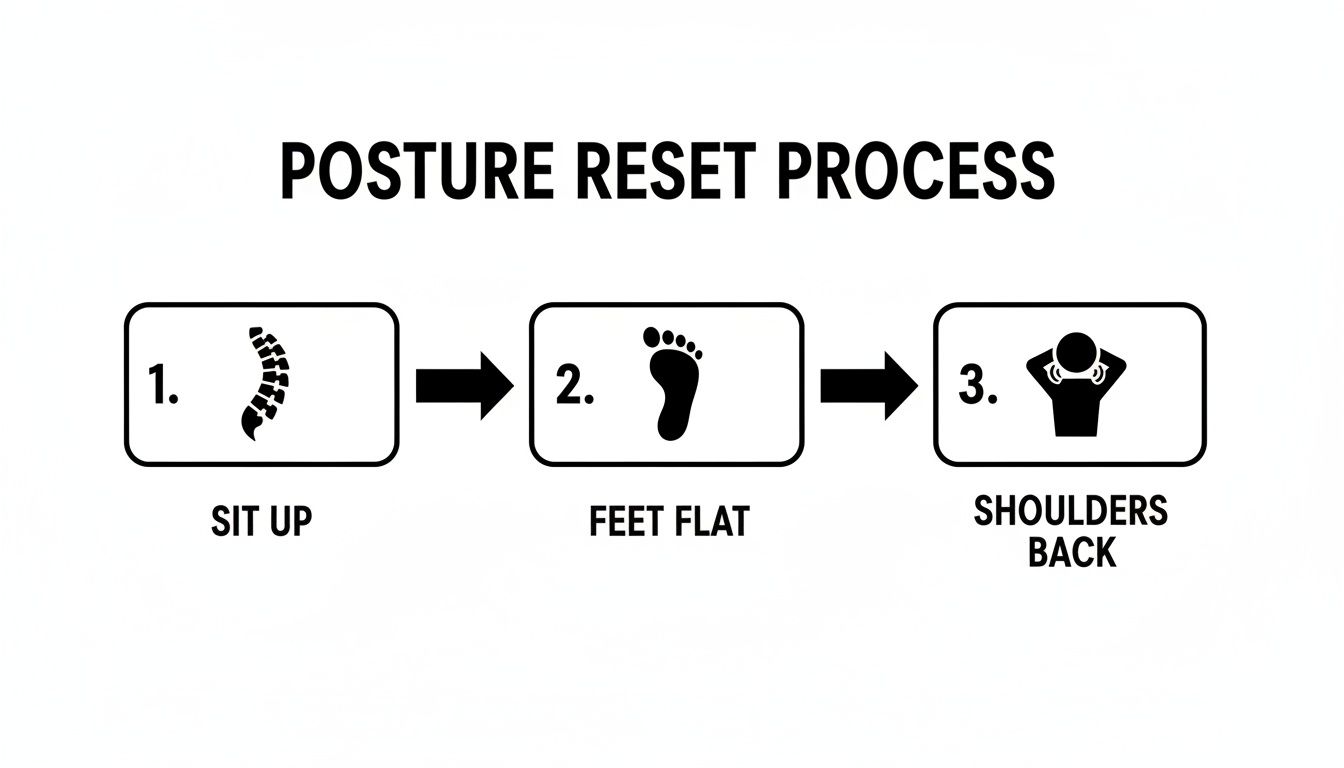
These three simple steps—sitting up straight, planting your feet, and rolling your shoulders back—are the core of a healthy sitting posture. You can do them anytime, anywhere, the moment you feel yourself starting to slouch.
Strengthening Your Core and Back for Postural Support
An ergonomic workstation is an excellent start, but it is your muscles that do the heavy lifting. True postural endurance—the ability to sit upright for hours without fatiguing—comes from within.
A strong, stable core and engaged back muscles are your body's natural defense against slouching. Without that internal support system, even the best ergonomic chair won't stop you from slumping forward.
At Hershey Family Chiropractic, we emphasize that building foundational strength is as crucial as creating a supportive environment. When your postural muscles are weak, your spine and ligaments take on extra strain, leading to the persistent pain we see in our patients. This is why we integrate simple, targeted exercises into our chiropractic care plans—to ensure you achieve long-term, sustainable results.
Foundational Exercises for Spinal Stability
It is helpful to think of your core as a complete muscular "corset" that wraps around your midsection, including your lower back and glutes. When this corset is strong, it holds your spine in a stable position automatically.
Here are a few chiropractor-approved exercises designed to strengthen these crucial muscle groups.
1. The Bird-Dog
This exercise is fantastic for improving stability. It trains your body to keep the spine neutral while your arms and legs are in motion. It specifically targets the deep core muscles and the erector spinae muscles along your spine.
- Start on all fours, with your hands directly under your shoulders and your knees under your hips.
- Engage your core and keep your back flat—imagine balancing a cup of water on it.
- Slowly extend your right arm straight forward and your left leg straight back at the same time.
- Hold for 3-5 seconds, focusing on not wobbling, then gently return to the start.
- Switch sides. Aim for 10-12 repetitions per side.
2. The Glute Bridge
Your glutes are powerful postural muscles that can become weak from prolonged sitting. Strong glutes help stabilize your pelvis and support your lower back, preventing the tailbone-tuck that leads to slouching.
- Lie on your back with your knees bent and feet flat on the floor, hip-width apart. Keep your arms by your sides.
- Tighten your core and squeeze your glutes as you lift your hips off the floor, forming a straight line from your shoulders to your knees.
- Hold the top position for a few seconds, then slowly lower back down.
- Perform 12-15 repetitions.
Chiropractor's Tip: Focus on the mind-muscle connection. Actively think about squeezing your glute muscles to do the lifting, rather than just arching your lower back. This mental shift ensures you target the right muscles for maximum postural benefit.
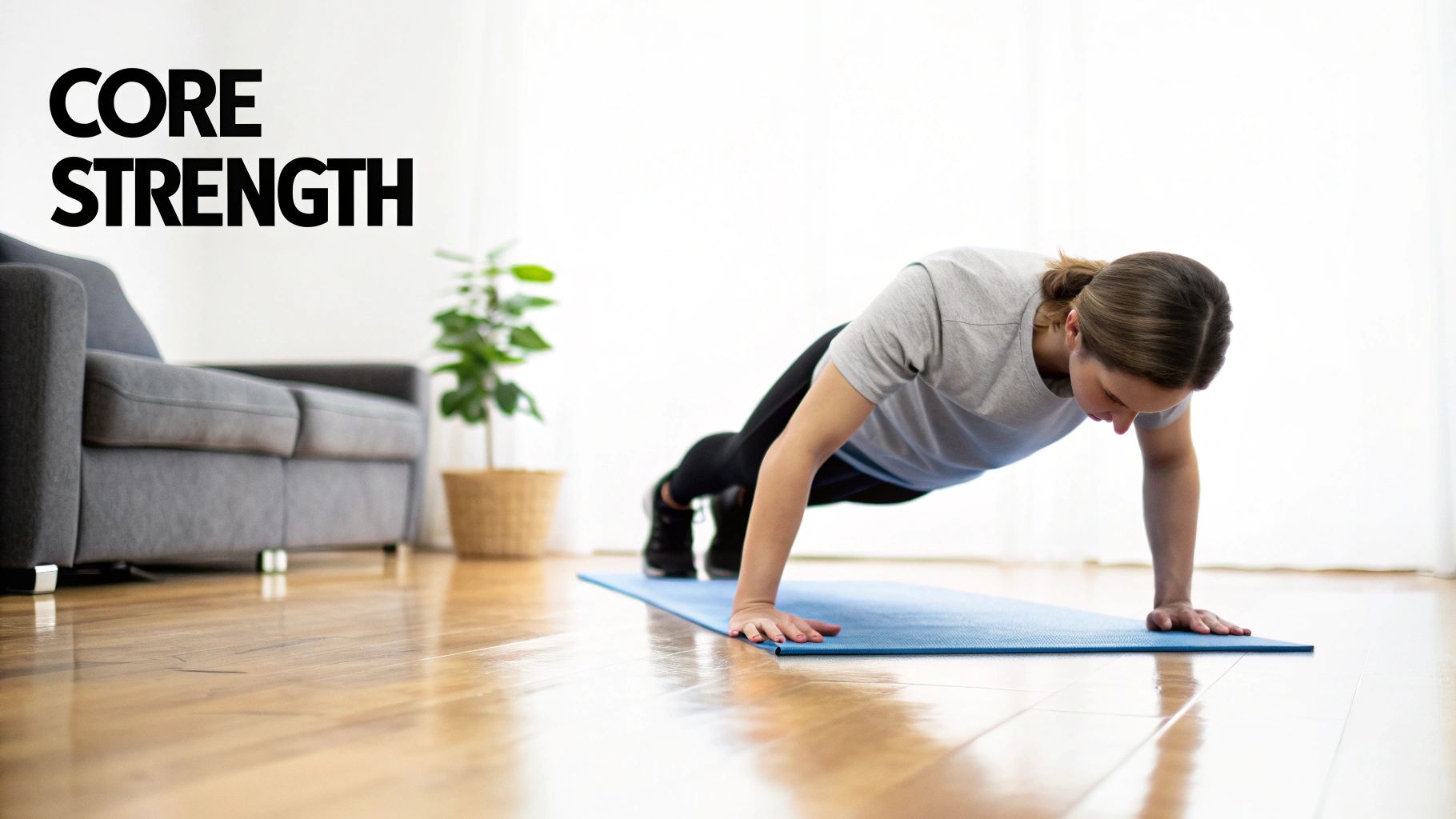
3. The Plank
The plank is a classic for a reason. It engages the entire core, especially the transverse abdominis—a deep muscle that acts like a built-in weight belt for your spine.
- Position yourself on your forearms and toes, keeping your body in a straight line from head to heels.
- Brace your core, squeeze your glutes, and engage your quads. Avoid letting your hips sag or rise too high.
- Hold for 20-30 seconds to start, gradually increasing the duration as you get stronger.
Integrating Strength into Your Daily Routine
Consistency beats intensity every time. Try to incorporate a short routine of these exercises into your day, perhaps in the morning or during a lunch break.
Just 10-15 minutes a few times a week can make a remarkable difference in your postural endurance. As you get stronger, you might also find it helpful to explore gentle movements like yoga poses for lower back pain to complement your routine and improve flexibility.
By building a strong and stable core, you give your body the tools it needs to maintain proper alignment naturally. This proactive approach doesn't just help you sit better; it reduces your risk of developing the chronic back and neck pain that brings so many people to our Hershey chiropractic office.
Micro-Habits and Movement Breaks to Combat a Sedentary Day
Even with a perfect ergonomic setup and strong postural muscles, the human body was not built to sit still for eight hours. Static sitting is the enemy of a healthy spine. The key to combating a sedentary workday is a series of small, consistent movements that break the cycle of stillness.
This is where micro-habits and movement breaks come in. At Hershey Family Chiropractic, we constantly emphasize to our patients that frequent, small movements are often more effective for preventing back and neck pain than a single long workout. It is all about reminding your body to stay mobile and aligned.
Embrace the "30-for-30" Rule
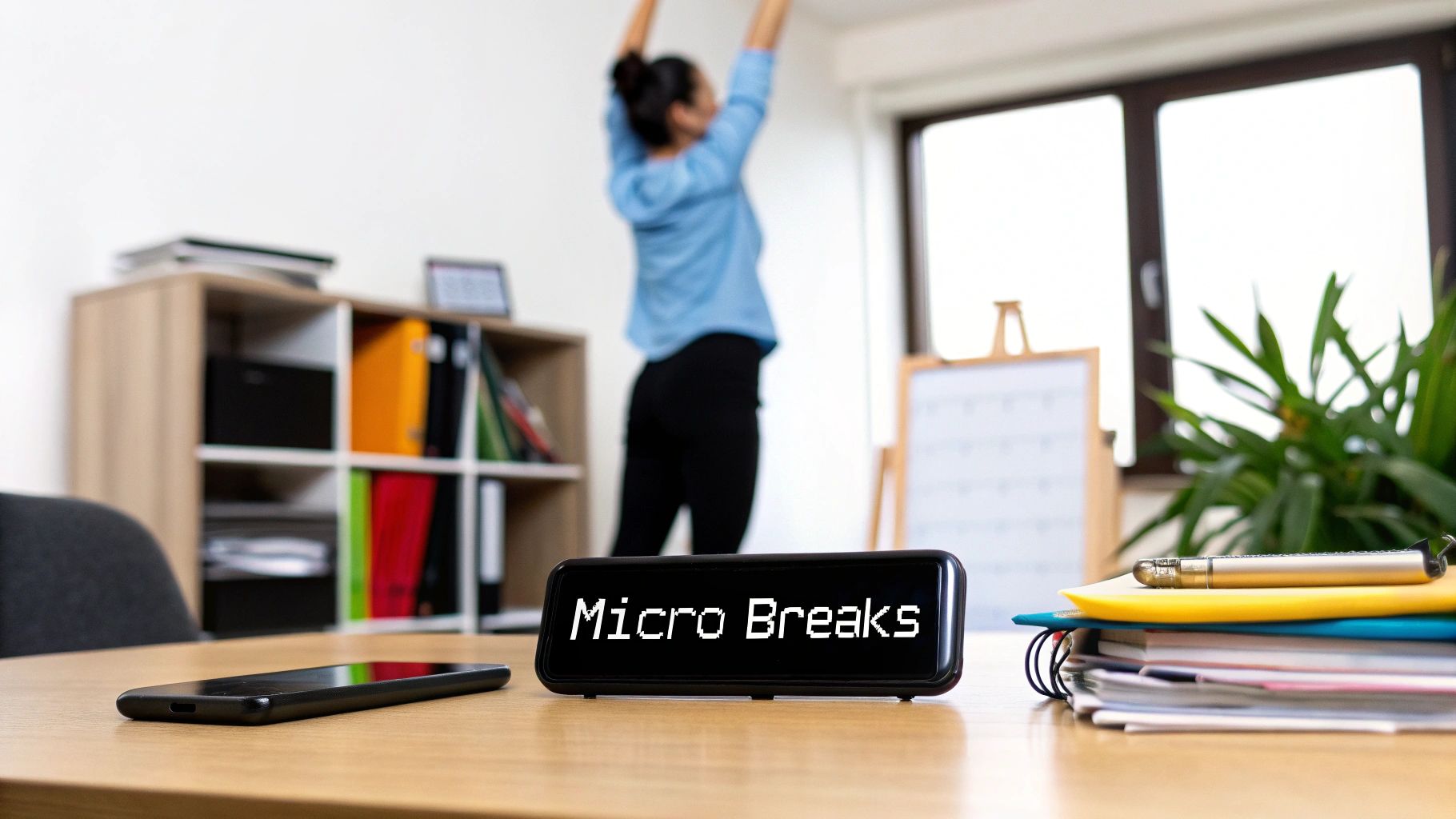
The simplest and most powerful micro-habit is the "30-for-30" rule: for every 30 minutes you sit, get up and move for at least 30 seconds. This small action prevents muscle stiffness, boosts circulation, and gives your posture a needed reset.
You don’t need to do anything complicated during these breaks.
- Stand up and stretch your arms overhead.
- Walk to the kitchen for a glass of water.
- Do a few gentle neck rolls.
- Simply stand and march in place.
The goal is to interrupt the static load on your spine. Set a recurring timer on your phone or computer to make it a non-negotiable part of your routine. This consistent interruption stops the gradual slide into a slouched position.
Integrate Simple Desk-Side Stretches
You can also perform quick, effective stretches right from your chair. These movements target the areas that are most affected by prolonged sitting—your neck, shoulders, and upper back.
Chin Tucks
This is the number one exercise for countering "tech neck." Sit tall and gently pull your chin backward as if making a double chin. You should feel a stretch at the base of your skull. Hold for 5 seconds and repeat 10 times.
Shoulder Blade Squeezes
Imagine you're holding a pencil between your shoulder blades. Sit upright, relax your shoulders down, and gently squeeze your blades together. This activates the rhomboid muscles, which are crucial for pulling your shoulders back. Hold for 5 seconds and repeat 10-15 times.
Seated Cat-Cow
Place your hands on your knees. As you inhale, arch your back and look up (Cow). As you exhale, round your spine and tuck your chin to your chest (Cat). This simple flow mobilizes the spine and relieves stiffness.
These movements are a form of active communication with your body. Each stretch signals your muscles and nervous system to release tension and return to a more neutral, supported alignment.
Make Active Sitting a Habit
Active sitting involves engaging your core muscles while seated, turning a passive activity into a subtle strengthening opportunity. Instead of sinking into your chair, lightly engage your abdominal muscles to support your upper body.
Another great technique is to periodically shift your weight from one side to the other or perform gentle pelvic tilts. This prevents pressure from building up and keeps the small stabilizing muscles in your lower back engaged. These tiny adjustments accumulate over the day, building endurance and preventing fatigue.
You have adjusted your workstation, you are doing your stretches, and you are trying to sit up straight. But what if the pain just is not going away?
While self-care and ergonomic tweaks are fantastic first steps, they are sometimes not enough to solve the root problem. If you are still dealing with persistent neck or back pain, recurring headaches, or a pins-and-needles sensation, it may be a sign that a deeper issue requires professional chiropractic care.
Think of it this way: you can keep straightening a crooked picture, but if the nail it’s hanging on is bent, the picture will always end up tilted. Similarly, if your spine is misaligned, your muscles are forced to overcompensate, leading to chronic pain no matter how hard you try to maintain good posture.
Warning Signs That Point to a Deeper Issue
It is important to listen to your body. Occasional stiffness is one thing, but certain signals indicate it’s time for a professional evaluation from a chiropractor in Hershey.
Keep an eye out for these red flags:
- Pain that sticks around: Discomfort that lasts more than a few days or keeps returning is a sign of more than just muscle fatigue.
- Radiating symptoms: Pain, numbness, or tingling that travels down your arms or legs is a classic indicator of nerve compression. As a sciatica chiropractor, this is something we address daily.
- Chronic headaches or migraines: Poor posture creates tension in the neck and upper back, a primary trigger for headaches. We can provide headache and migraine treatment to address the source of your pain.
- A noticeable imbalance: If you feel like you are always leaning to one side or have noticed one shoulder is higher than the other, it could indicate a spinal issue.
These are clear signs that your body's underlying structure needs attention.
What to Expect at Hershey Family Chiropractic
When you visit our clinic here in Hershey, PA, our first goal is to find the why behind your posture problems. We conduct a comprehensive evaluation of your musculoskeletal system, movement patterns, and lifestyle. This includes a postural analysis, range of motion tests, and a conversation about your symptoms and goals.
From there, we develop a personalized care plan. For many of our patients, this involves gentle, specific chiropractic adjustments designed to restore proper alignment to the spine. By correcting these structural imbalances, we can take pressure off your nerves and muscles, often providing immediate relief and building a solid foundation for lasting postural improvements.
The rise of posture-related health issues is a significant concern. Research confirms that sedentary habits are a major contributor to back pain, neck strain, and spinal misalignment. This growing awareness is why sitting support devices are the fastest-expanding segment of the posture correction industry. You can explore more about these market trends to understand the widespread impact of sedentary lifestyles on spinal health.
As a trusted back pain chiropractor in Hershey, our approach is two-fold. We work to relieve your current pain while empowering you with the tools you need to stay healthy. This often means creating an individualized rehab plan with targeted exercises and stretches to strengthen weak muscles and release chronic tension, helping you build a resilient spine.
Common Questions About Sitting Posture
Here at Hershey Family Chiropractic, we receive many of the same questions about sitting posture. We have gathered a few of the most common queries we hear from our community in Hershey, PA, to give you clear, practical answers.
Getting the nuances of good posture right helps you make smarter choices throughout the day. It is about turning passive sitting into an active strategy for your health.
Is It Bad to Sit with My Legs Crossed?
This is one of the most frequent questions we get. When you cross your legs, you create a subtle tilt in your pelvis. That tilt puts uneven stress on your lower back and the sacroiliac (SI) joints.
Crossing them for a few minutes here and there is not a major problem. But making it your default position for hours can contribute to postural imbalances, hip pain, and even sciatica symptoms.
We recommend sitting with both feet flat on the floor. If you catch yourself crossing your legs out of habit, try to be mindful and switch which leg is on top to minimize asymmetrical strain.
Can a Standing Desk Completely Solve My Posture Problems?
A standing desk is a fantastic tool, but it only reduces the amount of time you spend sitting. It is not a magic bullet for poor posture. It is just as easy to stand with bad posture as it is to sit with it.
We see common mistakes like locking the knees, leaning weight onto one hip, or hunching the shoulders forward. The real benefit of a standing desk is the ability to vary your position. The goal is a dynamic workday where you alternate between sitting and standing with proper alignment.
Think of a standing desk as a way to promote movement, not just a static replacement for your chair.
How Long Does It Take to See Posture Improvements?
There is no universal timeline. Improving your posture is a process of unlearning old habits while building new muscle memory. How long it takes depends on your consistency and the specific issues you are dealing with.
Many people report feeling less pain within a few weeks of making conscious ergonomic changes and taking regular movement breaks. However, creating lasting structural change—strengthening postural muscles to hold your new alignment naturally—can take several months.
The most important factor is consistency. Small, daily efforts are far more effective than occasional, intense bursts of effort. If underlying spinal misalignments are part of the problem, chiropractic adjustments can significantly speed up this process by correcting the root biomechanical issue.
Are Posture Corrector Braces Effective?
Posture corrector braces can be a useful tool, but they come with important caveats. They work by providing tactile feedback—a physical reminder to pull your shoulders back. In that sense, they can be effective for short-term training.
However, we caution against relying on them long-term. If you wear a brace for too many hours a day, it starts doing the work for your muscles. This can cause your natural postural stabilizers to become weaker, creating a dependency.
The best approach is to use a brace for limited periods, perhaps an hour or two a day, while also doing the strengthening exercises needed to support your posture naturally. Think of it as a temporary training wheel, not a permanent solution.
At Hershey Family Chiropractic, we are dedicated to helping our Hershey community move better and live without pain. If you are struggling with persistent discomfort from poor sitting habits, we are here to help you find the root cause and create a personalized plan for lasting relief. Schedule your consultation today by visiting https://hersheyfamilychiropractic.com.