Stiffness in your back, neck, or hips isn't just an annoyance; it's a sign that your body is calling for help. Limited flexibility can lead to chronic pain, poor posture, and an increased risk of injury, preventing you from enjoying life in Hershey, PA, to the fullest. Whether you're an athlete dealing with a sports injury, a parent with persistent back pain, or a professional spending hours at a desk, restoring your body's natural range of motion is crucial for long-term health. Many people try stretching at home, only to find the stiffness quickly returns, which can be a frustrating cycle.
The problem often lies deeper than tight muscles, frequently involving the alignment of your spine and the optimal function of your joints. At Hershey Family Chiropractic, we understand that true flexibility is more than just touching your toes; it’s about restoring healthy, pain-free movement patterns from the inside out. Before diving into specific techniques, it helps to know where you stand. A common assessment is the Sit and Reach Test, which provides a simple measure of hamstring and lower back suppleness.
This guide explores the best ways to improve flexibility, combining proven at-home techniques with the foundational benefits of professional chiropractic care from a chiropractor near you in Hershey. We will cover effective methods, from dynamic stretching to the crucial role of targeted soft-tissue therapies and chiropractic adjustments. Let's explore how you can move better, feel better, and get back to the activities you love, free from restriction and pain.
1. Dynamic Stretching
Dynamic stretching is an active method where you move your joints and muscles through their full range of motion in a controlled, fluid manner. Unlike holding a stretch for a long period (static stretching), dynamic movements gradually increase muscle temperature, blood flow, and nerve activity. This process effectively "wakes up" the body, preparing it for physical activity and reducing the risk of injury.
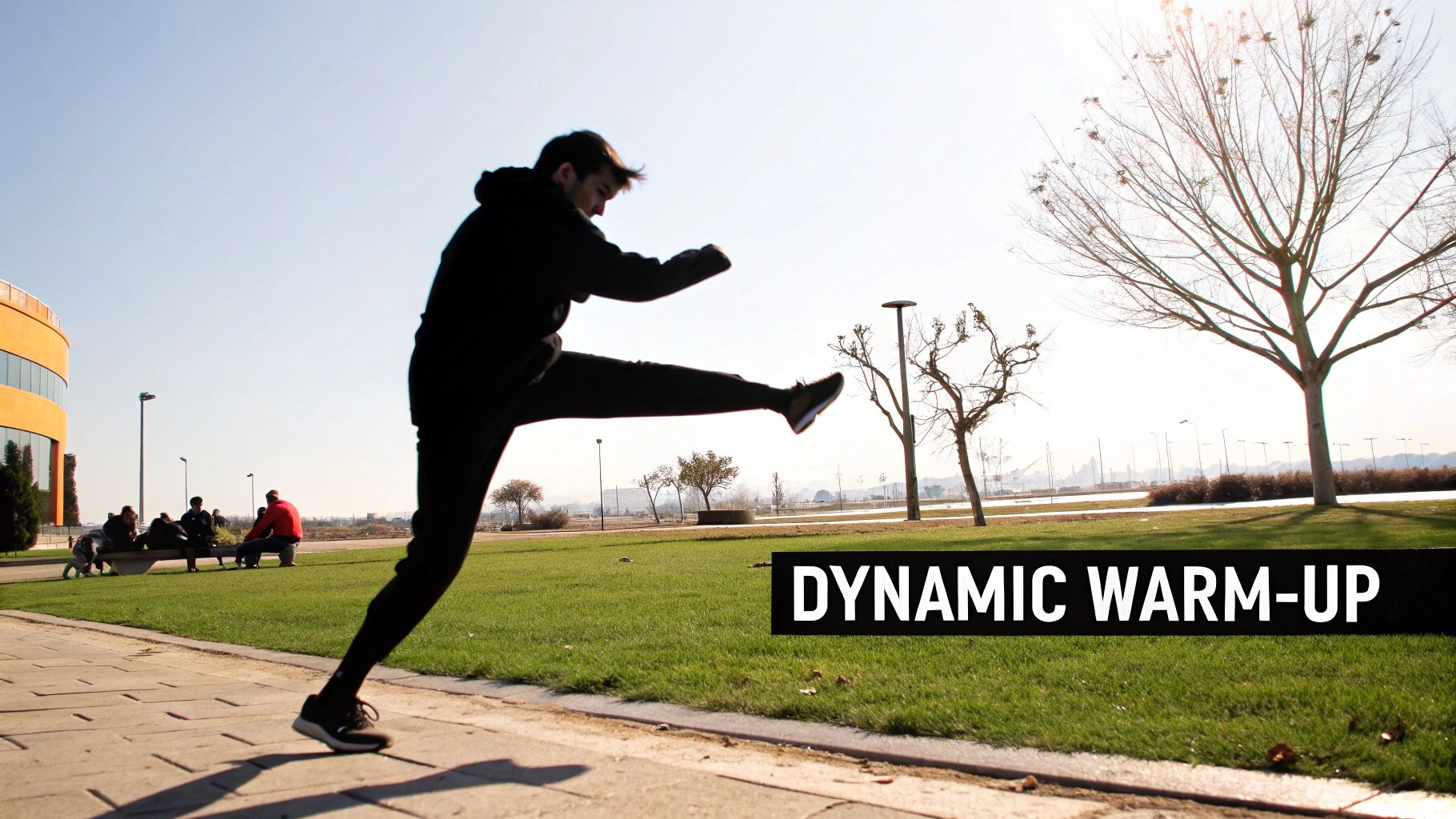
This technique is one of the best ways to improve flexibility because it enhances mobility and lubricates the joints without overstretching cold tissues. For patients at Hershey Family Chiropractic, incorporating dynamic stretches is a safe and effective way to prepare for a chiropractic adjustment, physical therapy session, or daily activities. It’s particularly beneficial for those managing spine-related conditions like neck pain or sciatica.
How to Implement Dynamic Stretching
The key to dynamic stretching is controlled, rhythmic movement. The goal is to gently push the boundaries of your range of motion, not to force anything.
Practical Examples:
- For Desk-Related Stiffness: Perform 10 seated torso twists in each direction and 10 slow shoulder circles to alleviate stiffness from prolonged sitting.
- Before Physical Activity: Do walking lunges with a torso twist or leg swings (forward-and-back and side-to-side) to prime the hips and legs.
- During Rehabilitation: Patients recovering from an auto injury or sports injury can use gentle, controlled arm circles to restore mobility under the guidance of their chiropractor.
Actionable Tips for Success
To get the most out of dynamic stretching, follow these simple guidelines:
- Perform 5-10 controlled repetitions for each movement.
- Focus on major joints including the hips, shoulders, and spine.
- Move within a comfortable range, gradually increasing the depth and speed of the movement as you warm up.
- Incorporate into your warm-up routine before exercise or even before a busy day.
- Consult your chiropractor at our Hershey office to identify the specific dynamic stretches that are safest and most beneficial for your condition.
2. Static Stretching
Static stretching is a classic flexibility technique that involves holding a specific stretch in a comfortable but challenging position for an extended period, typically 15 to 60 seconds. This sustained hold allows your muscles and connective tissues to relax and lengthen. Unlike dynamic stretching, which prepares the body for activity, static stretching is ideal for cooling down and improving long-term, resting flexibility.
This method is one of the best ways to improve flexibility for individuals dealing with chronic muscle tightness or postural strain. For our patients at Hershey Family Chiropractic, targeted static stretching is a cornerstone of recovery, helping to alleviate tension in the neck, back, and hips that often contributes to headaches and sciatica. It's particularly effective for improving range of motion and reducing the risk of strain.
How to Implement Static Stretching
The key to effective static stretching is to ease into the position until you feel a gentle pull, then hold it while breathing deeply. The goal is to relax the muscle, not to force it into a painful range.
Practical Examples:
- For Neck & Back Pain Relief: After a long day, hold a hip flexor stretch (kneeling lunge) for 30 seconds on each side to counteract the effects of a sedentary posture. Perform a doorway chest stretch to open up the shoulders and relieve upper back tension.
- Post-Workout Cool-Down: Following a run, hold a standing quadriceps stretch and a calf stretch against a wall for 30 seconds per leg to promote muscle recovery.
- For General Stiffness: A seated hamstring stretch can safely improve lower body flexibility and make daily activities like bending easier.
Actionable Tips for Success
To safely and effectively incorporate static stretching, follow these guidelines:
- Hold each stretch for 15-30 seconds, breathing deeply throughout.
- Perform after a workout or later in the day when your muscles are warm.
- Never bounce or stretch to the point of pain; this can cause micro-tears in the muscle.
- Focus on consistency over intensity. Gentle, regular stretching yields better results.
- Target your specific areas of tightness. Our chiropractors in Hershey can help identify which muscles need the most attention to support your spinal health.
3. Proprioceptive Neuromuscular Facilitation (PNF) Stretching
Proprioceptive Neuromuscular Facilitation (PNF) is an advanced stretching technique that combines passive stretching with muscle contraction to achieve rapid flexibility gains. This method essentially "tricks" your nervous system into relaxing a muscle more deeply than it normally would. By contracting a muscle against resistance right before stretching it, you activate a reflex that allows for a greater range of motion.
This evidence-based approach is one of the best ways to improve flexibility because it leverages your body's own neuromuscular responses. For patients at Hershey Family Chiropractic, PNF is often incorporated into rehabilitation plans to restore function and mobility efficiently. It’s particularly effective for athletes or individuals dealing with chronic muscle tension that doesn’t respond well to traditional stretching.
How to Implement PNF Stretching
PNF stretching is a precise technique that often requires a partner or a professional, like a chiropractor or physical therapist, to provide resistance and ensure proper form.
Practical Examples:
- For Athletes: A common PNF hamstring stretch involves lying on your back while a partner raises your leg. You then push against your partner's hand for several seconds, relax, and then the partner gently pushes your leg into a deeper stretch.
- For Post-Injury Rehab: A patient recovering from a whiplash or auto injury might use PNF to regain range of motion. Under our guidance at the Hershey clinic, they can perform specific contract-relax sequences to gently and safely increase mobility.
- For Chronic Tension: Individuals with tight hip flexors from prolonged sitting can use PNF with a strap or a partner to release tension and improve posture, often providing relief from back pain.
Actionable Tips for Success
To safely and effectively use PNF, it’s crucial to follow proper protocol:
- Learn proper technique from a professional at Hershey Family Chiropractic to prevent injury.
- Start with a 5-second muscle contraction at about 50-75% of your maximum effort.
- Only perform PNF on warm muscles, ideally after a dynamic warm-up.
- Use 2-3 times per week on non-consecutive days for best results.
- Always communicate with your partner or therapist during the stretch to avoid pushing past a safe limit.
4. Yoga and Yoga-Based Flexibility Training
Yoga is a mind-body practice that merges physical postures, controlled breathing, and meditation to enhance flexibility, build strength, and promote overall wellness. By moving through a series of poses, yoga encourages muscles to lengthen and release tension while also improving joint mobility and balance.
This ancient practice is one of the best ways to improve flexibility because it addresses both physical and mental components of tightness. For patients at Hershey Family Chiropractic, yoga serves as an ideal complement to chiropractic care. It helps reinforce proper spinal alignment, increases spinal mobility, and mitigates the stress-related muscle tension that often contributes to back and neck pain.
How to Implement Yoga
The goal is to find a practice that suits your body's current needs and to move with mindful awareness rather than forcing positions.
Practical Examples:
- For Back Pain Relief: Gentle yoga poses like Cat-Cow and seated spinal twists can counteract postural strain and improve spinal mobility.
- For Chronic Pain Management: Restorative or Yin yoga classes offer gentle, supported stretches that can help relieve chronic tension and discomfort in the lower back and hips, often associated with sciatica.
- For Prenatal Care: Gentle prenatal yoga can help manage pregnancy-related back pain and improve pelvic flexibility.
Actionable Tips for Success
To safely integrate yoga into your flexibility routine, consider these guidelines:
- Start with a beginner-level class to learn foundational poses and proper alignment.
- Inform your instructor about any injuries or physical limitations before class begins.
- Practice 3-4 times per week to achieve meaningful and lasting flexibility gains.
- Never force a pose; work within your comfortable range of motion.
- Consult with your chiropractor at our Hershey clinic to determine which yoga styles are most suitable for your specific condition and treatment plan.
5. Foam Rolling and Self-Myofascial Release
Foam rolling, also known as self-myofascial release (SMR), is a self-directed massage technique that uses a cylindrical tool to apply sustained pressure to muscles and the surrounding connective tissue (fascia). This process helps release tension, break up muscular knots, and reduce restrictions that limit movement.
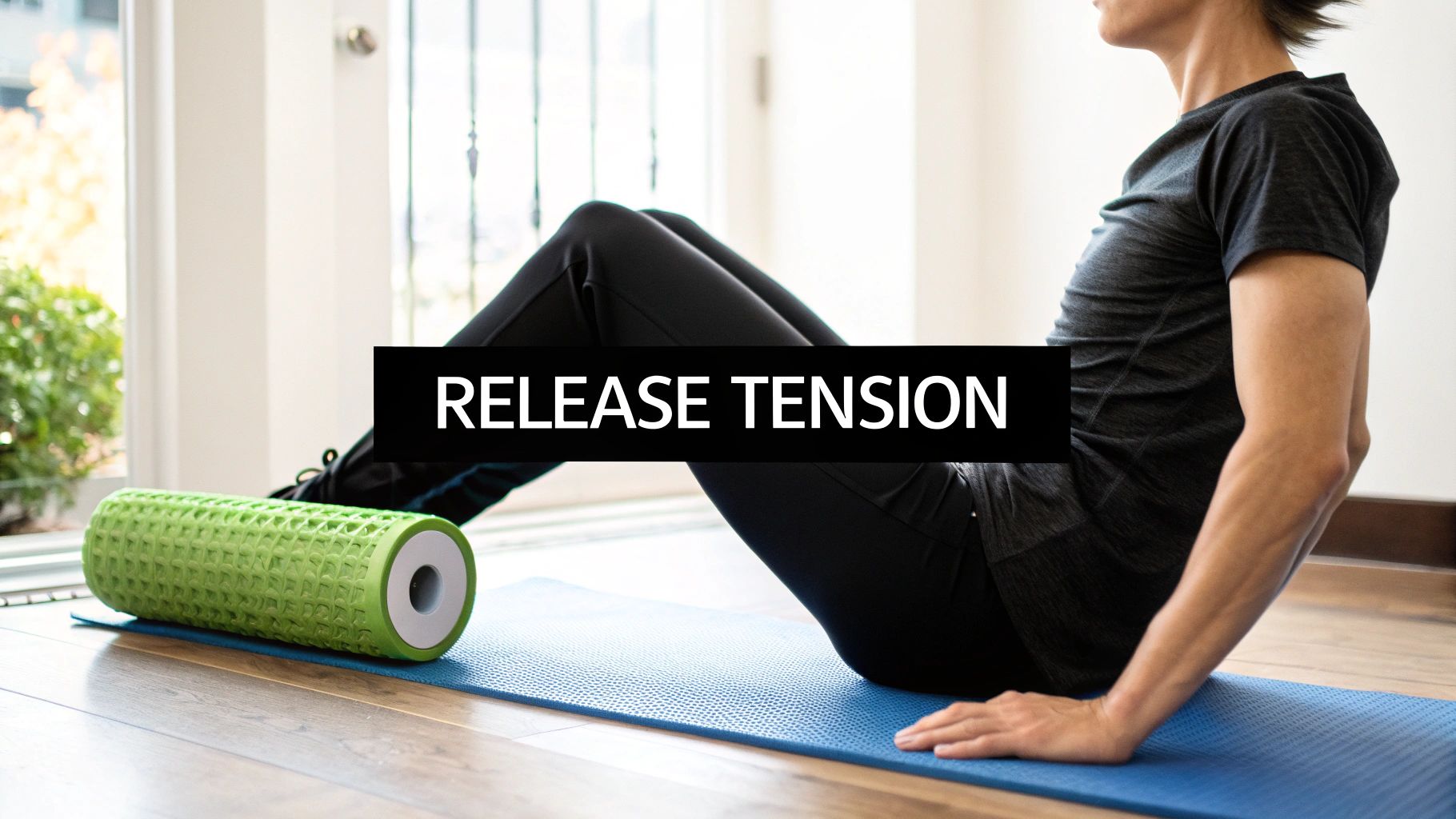
This method is one of the best ways to improve flexibility because it directly addresses the soft tissue component of tightness. For patients at Hershey Family Chiropractic, incorporating SMR complements chiropractic adjustments by addressing muscular imbalances between visits. It’s an effective tool for those managing chronic tightness from back pain, neck pain, or sciatica.
How to Implement Foam Rolling
The goal of foam rolling is to use your body weight to apply slow, controlled pressure to a targeted muscle group, pausing on any particularly tender spots to allow the tissue to release.
Practical Examples:
- For Lower Body Tightness: Use a foam roller on the calves, hamstrings, and IT bands to improve lower body flexibility.
- For Upper Back Pain: Release tension in the upper back and shoulders by lying on a roller placed horizontally across the mid-back, supporting your head with your hands.
- For Sciatica Relief: Gently use a foam roller or lacrosse ball on the gluteal muscles to improve hip mobility and alleviate pressure that may contribute to sciatic nerve irritation.
Actionable Tips for Success
To get the most out of foam rolling, follow these simple guidelines:
- Start with 30-60 seconds per muscle group.
- Roll slowly and pause on any tender areas for 15-30 seconds, breathing deeply.
- Avoid rolling directly over bones or joints, like the kneecap or lower back spine.
- Use lighter pressure initially, increasing it as your tissues adapt.
- Ask your chiropractor at our Hershey office which specific areas would benefit most from foam rolling to support your treatment plan.
6. Chiropractic Adjustments for Back Pain, Neck Pain, and Sciatica
Chiropractic adjustments are precise, hands-on techniques applied by our licensed chiropractors in Hershey, PA, to restore proper joint mobility and improve spinal function. These manipulations directly enhance flexibility by addressing joint restrictions, reducing nerve interference, and improving the range of motion in the spine and extremities. As the core service at Hershey Family Chiropractic, adjustments target the root mechanical causes of stiffness that limit your body’s natural movement.
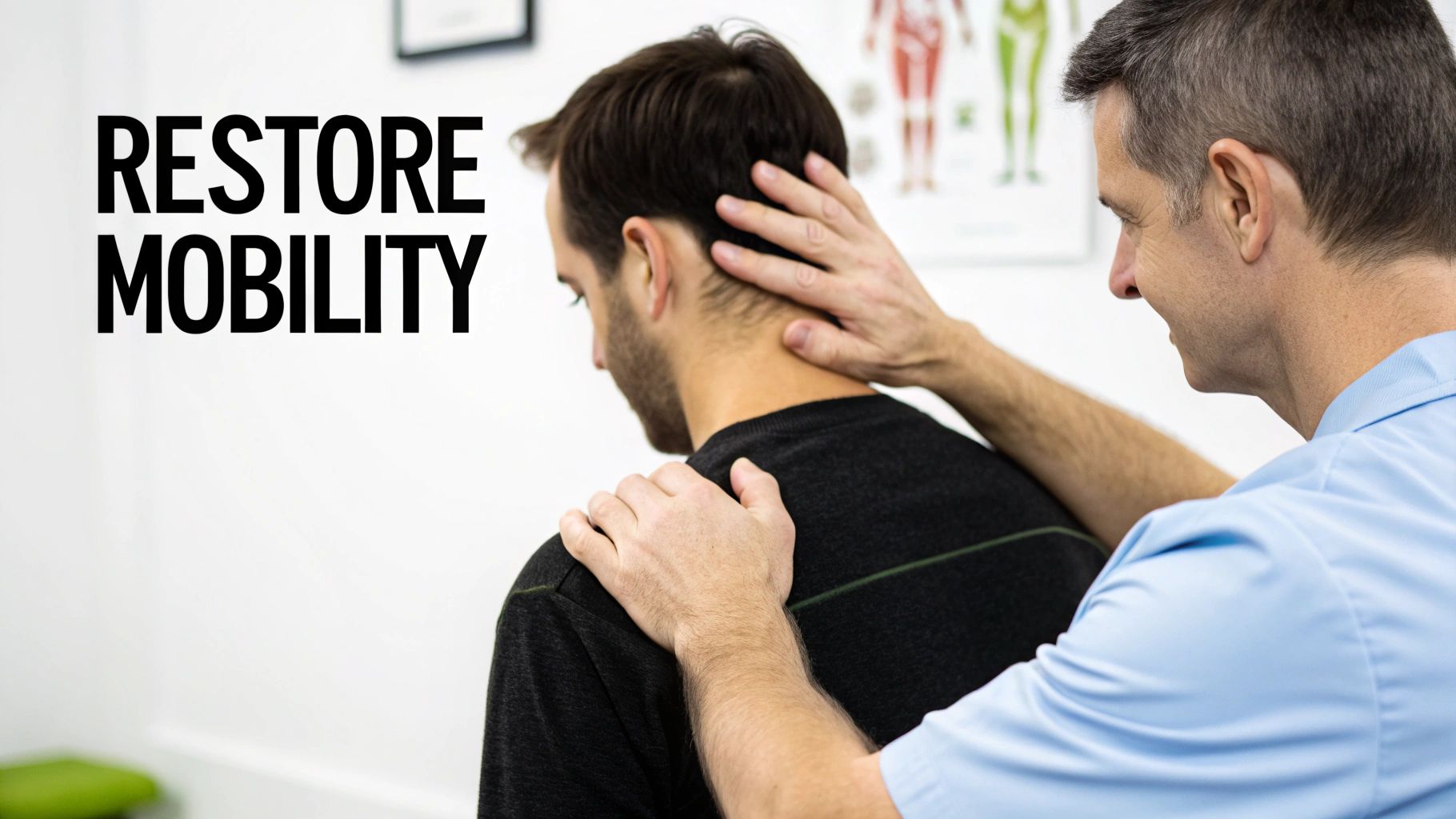
This method is one of the best ways to improve flexibility because it goes beyond just stretching muscles; it corrects the underlying joint dysfunctions that cause tightness in the first place. For our patients in Hershey, PA, spinal manipulation can provide immediate relief from back pain, neck pain, and sciatica, helping them return to their daily activities with less pain and greater ease.
How Our Chiropractors in Hershey, PA Help
A chiropractic adjustment gently and specifically moves a joint that is "stuck" or misaligned, which immediately restores its intended motion. This process also relaxes surrounding tight muscles and calms irritated nerves.
We Help Patients With:
- Neck Pain and Headaches: Individuals with stiff necks from poor posture or an auto injury can regain a full, pain-free range of motion after targeted cervical spine adjustments.
- Back Pain and Sciatica: Patients with lumbar stiffness and restricted movement can experience significant improvements in their ability to bend and twist after a series of adjustments.
- Sports Injuries: Regular chiropractic care helps athletes maintain optimal joint function in the hips, shoulders, and spine, preventing injuries and enhancing performance.
What to Expect During Your Visit
To maximize the benefits of your chiropractic care, consider the following:
- Communicate openly with your chiropractor about your symptoms and goals.
- Follow your recommended treatment plan to achieve lasting results.
- Combine adjustments with at-home exercises and stretches provided by your doctor.
- Maintain proper posture between appointments to support your spinal alignment.
- Report any changes in your symptoms to help your chiropractor tailor your care.
7. Therapeutic Massage and Soft Tissue Therapy
Therapeutic massage involves the hands-on manipulation of soft tissues like muscles, fascia, and tendons to release chronic tension, break down adhesions, and improve circulation. This targeted approach directly addresses the muscular restrictions that often limit your range of motion. By manually releasing this tightness, massage allows muscles to lengthen more effectively, enhancing overall flexibility.
For patients at Hershey Family Chiropractic, this technique is one of the best ways to improve flexibility because it complements chiropractic care perfectly. While adjustments restore proper joint alignment, therapeutic massage resolves the soft tissue barriers that can pull joints back out of place. This integrated approach ensures both skeletal and muscular systems are working together for optimal mobility. You can learn more about the benefits of combining these therapies on our blog.
How Therapeutic Massage Can Help You
Integrating professional massage into your wellness routine can yield significant flexibility gains, especially when targeted to your specific needs.
We Recommend Massage For:
- Neck and Shoulder Tension: Regular massage focused on the neck, shoulders, and upper back can release tension from prolonged sitting, restoring neck rotation and shoulder mobility.
- Sports Injury Recovery: A sports massage can address overworked muscle groups, breaking up fascial restrictions in the hamstrings and hips to improve performance and prevent injury.
- Post-Auto-Injury Rehab: Massage helps break down scar tissue from a previous injury like whiplash, allowing the affected tissues to regain their natural elasticity and function.
Actionable Tips for Success
To maximize the benefits of therapeutic massage, consider these professional recommendations:
- Communicate with your therapist about your pain levels, problem areas, and flexibility goals.
- Schedule sessions after chiropractic adjustments when possible to help your body hold the alignment better.
- Hydrate well after your massage to help flush metabolic waste released from the muscle tissues.
- Incorporate gentle stretching between sessions to maintain the gains you’ve made.
- Discuss a consistent schedule with your care team at our Hershey office to create lasting change.
8. Active Range of Motion (AROM) Exercises and Rehabilitation
Active Range of Motion (AROM) exercises involve you moving a joint through its natural range without any external assistance. This self-directed movement not only improves flexibility but also builds functional strength and neuromuscular control. Unlike passive stretching, AROM requires your own muscles to do the work, which is crucial for restoring movement patterns after an injury or managing chronic stiffness.
This method is one of the best ways to improve flexibility within a therapeutic context because it directly addresses functional limitations. For patients at Hershey Family Chiropractic, AROM exercises are a cornerstone of rehabilitation for conditions ranging from whiplash-associated neck pain to post-surgical joint stiffness. These targeted movements help restore normal joint mechanics and empower patients to take an active role in their recovery.
How to Implement AROM Exercises
The key to AROM is performing slow, deliberate movements within a pain-free range. The focus is on the quality of the motion, not how far you can push it.
Practical Examples:
- For Neck Pain After an Auto Injury: Perform gentle, slow chin tucks and cervical rotations (looking side to side) to regain mobility without straining healing tissues.
- For Shoulder Injury Recovery: After getting clearance from your chiropractor, you might perform pendulum swings or actively lift your arm forward and to the side to restore shoulder function.
- For Back Pain Relief: Cat-cow stretches and gentle pelvic tilts are excellent AROM exercises for the lumbar spine. These can help rebuild mobility and are often included in plans to relieve lower back pain naturally.
Actionable Tips for Success
To safely incorporate AROM into your routine, follow these guidelines:
- Learn exercises directly from your chiropractor or physical therapist to ensure proper form.
- Start with a small range of motion and gradually increase it as your comfort and flexibility improve.
- Perform exercises consistently, often daily, as prescribed by your provider.
- Focus on smooth, controlled movement rather than speed or quantity.
- Stop immediately if you feel any sharp or radiating pain and communicate this to your chiropractor in Hershey.
9. Pilates and Core-Focused Movement Training
Pilates is a systematic exercise method focused on controlled movements that enhance core strength, body awareness, and spinal alignment. Instead of targeting flexibility through passive stretching, Pilates builds a strong, stable foundation from which flexible, efficient movement can originate.
This discipline is one of the best ways to improve flexibility because it develops "active" or functional flexibility. For patients at Hershey Family Chiropractic, Pilates is an excellent complement to chiropractic adjustments. It reinforces proper spinal alignment and helps prevent the recurrence of issues like low back pain, postural dysfunction, and sciatica by building a resilient core.
How to Implement Pilates and Core Training
The foundation of Pilates is precision and control. The goal is to perform each movement with intention, focusing on engaging the correct muscles.
Practical Examples:
- For Postural Correction: Regular mat Pilates practice can counteract the effects of prolonged sitting by strengthening the core and lengthening the spine, alleviating chronic back and neck pain.
- For Improving Balance: Chair-based or modified Pilates routines can significantly improve balance and functional mobility, reducing the risk of falls.
- For Post-Injury Rehab: Patients can use Pilates to safely rebuild core stability and motor control after an injury, creating a stable base for the spine and joints.
Actionable Tips for Success
To integrate Pilates effectively into your wellness routine, consider these guidelines:
- Start with a qualified instructor to learn foundational principles and ensure proper form.
- Focus on quality over quantity; slow, controlled movements are more effective.
- Aim for 2-3 sessions per week to build core strength and see tangible improvements.
- Inform your instructor about any injuries or limitations, especially those being treated at our Hershey clinic.
- Combine with your chiropractic care to support spinal alignment and long-term joint health.
10. Mobility Work and Joint Mobility Techniques
Mobility work is a comprehensive approach that combines flexibility with strength and stability training to enhance the quality of movement at your joints. Unlike stretching, which focuses solely on lengthening muscles, mobility techniques address the entire joint capsule, neuromuscular control, and functional movement patterns.
This method is one of the best ways to improve flexibility because it creates lasting changes in how you move. For patients at Hershey Family Chiropractic, integrating mobility drills can correct dysfunctional patterns that contribute to back pain, sciatica, and postural strain. It empowers you to move with greater freedom and less risk of re-injury.
How to Implement Mobility Work
The goal of mobility work is to actively improve a joint's ability to move through its intended range. This involves controlled exercises that challenge both your flexibility and your ability to stabilize the joint.
Practical Examples:
- For Restoring Spinal Mobility: Perform 10-15 "cat-cow" stretches on your hands and knees to restore thoracic spine mobility lost from hours of sitting.
- For Hip Pain and Sciatica: Use exercises like hip CARs (controlled articular rotations) or the "90/90" hip stretch to improve hip rotation and depth.
- For General Joint Health: Gentle ankle CARs and controlled hip circles can improve mobility in the joints above and below the low back, helping to alleviate nerve compression.
Actionable Tips for Success
To effectively incorporate mobility work into your routine, follow these key tips:
- Practice mobility drills 5-7 days a week for the best and fastest results.
- Start with your most restricted joints first to make the biggest impact on your movement.
- Combine mobility with strengthening to ensure your newfound range of motion is stable.
- Integrate drills into your warm-up to prepare your joints for activity.
- Ask your chiropractor at our Hershey clinic to assess your movement patterns and recommend specific mobility exercises tailored to your needs.
Top 10 Flexibility Methods Comparison
| Technique | Implementation complexity | Resource requirements | Expected outcomes | Ideal use cases | Key advantages |
|---|---|---|---|---|---|
| Dynamic Stretching | Moderate — requires correct form and control | Minimal (space, bodyweight) | Increased blood flow, improved functional ROM and warm-up | Pre-activity warm-up, rehab sessions, preparing for therapy | Activates stabilizers, improves movement quality, reduces injury risk |
| Static Stretching | Low — simple holds, low technical demand | Minimal (space, optional strap) | Long-term flexibility gains, reduced muscle tension | Chronic stiffness, post-workout, desk workers and older adults | Safe, accessible, supports posture and recovery |
| PNF Stretching | High — advanced technique, precise timing | Trained partner or clinician, guidance | Rapid increases in ROM, neuromuscular facilitation | Athletes, supervised rehabilitation, stubborn restrictions | Fastest method for flexibility gains; effective for tight areas |
| Yoga & Yoga-Based Training | Moderate — technique varies by style and pose | Mat, instructor or class recommended | Improved flexibility, strength, balance, and stress reduction | Holistic rehab, chronic pain, posture correction, wellness | Combines strength with flexibility; supports mind-body connection |
| Foam Rolling / Self-Myofascial Release | Low to moderate — basic technique with some skill | Foam roller, massage ball (affordable) | Reduced muscle tension, temporary ROM improvement, faster recovery | Between appointments, post-workout, desk-related tightness | Inexpensive, self-directed, targets specific trigger points |
| Chiropractic Adjustments | High — requires licensed practitioner | Clinic visit, chiropractor expertise | Immediate joint mobility gains, reduced nerve interference | Joint restrictions, spinal stiffness, foundational treatment | Restores joint mechanics; enables other flexibility methods |
| Therapeutic Massage / Soft Tissue Therapy | Moderate — professional skill required | Licensed therapist, treatment sessions | Reduced soft-tissue restrictions, improved circulation and ROM | Muscular guarding, scar tissue, chronic soft-tissue restrictions | Directly addresses tissue barriers that stretching alone cannot |
| AROM Exercises & Rehabilitation | Moderate — requires prescription and coaching | Minimal equipment, clinician-prescribed program | Restored functional ROM with concurrent strength gains | Post-injury rehab, chronic condition recovery, functional rebuilding | Builds strength while improving mobility; measurable progress |
| Pilates & Core-Focused Training | Moderate to high — technique and control emphasized | Mat or equipment classes, qualified instructor | Improved core stability, posture, gradual flexibility gains | Postural dysfunction, chronic low-back pain, long-term prevention | Enhances movement efficiency and spinal support; prevents re-injury |
| Mobility Work & Joint Mobility Techniques | High — assessment-driven, skillful programming | Minimal tools optional (bands, balls); specialist assessment | Functional joint mobility, improved motor control and proprioception | Complex movement dysfunction, athletes, desk-related joint loss | Translates flexibility into stable, usable movement; individualized |
Your Trusted Chiropractor in Hershey, PA for Pain Relief and Mobility
Embarking on a journey to improve flexibility is one of the most powerful investments you can make in your long-term health and quality of life. We’ve explored the diverse and effective strategies available, from the preparatory power of dynamic stretching and the restorative depth of static holds to advanced techniques like PNF and the holistic mind-body connection fostered by yoga and Pilates.
These methods represent the core toolkit for anyone seeking to enhance their range of motion. Yet, true, lasting progress isn't just about performing isolated exercises. The real transformation happens when you see these practices as interconnected components of a comprehensive movement strategy. The goal is to build a consistent, personalized routine that addresses your body’s unique needs, whether you're an athlete in Hershey recovering from an injury or a desk worker trying to alleviate chronic back pain.
From Knowledge to Action: Your Path to Lasting Flexibility
Understanding how to improve flexibility is crucial, but the most important takeaway is why: improved flexibility translates directly to reduced pain, lower injury risk, better posture, and the freedom to move through your day with ease and confidence. The best ways to improve flexibility are those that you can integrate into your life consistently.
To make this transition from reading to doing, consider these actionable next steps:
- Audit Your Current Routine: Where are you feeling the most restriction? Is it tight hamstrings from sitting, stiff shoulders from computer work, or general back soreness? Identify one or two key areas to focus on first.
- Start Small and Build Momentum: Don't try to incorporate all ten methods at once. Choose one or two that resonate with you. For example, commit to five minutes of dynamic stretching in the morning and ten minutes of static stretching before bed.
- Listen to Your Body: Flexibility is not a competitive sport. Pushing into sharp pain is counterproductive and can lead to injury. Learn to distinguish between the gentle discomfort of a productive stretch and a warning sign from your body.
Ultimately, enhancing flexibility is about re-establishing a healthy relationship with your body. It involves understanding how daily habits contribute to stiffness and learning how to counteract them. Beyond specific stretches, a deeper understanding of how to proactively “fix your poor movement patterns” can dramatically enhance overall flexibility and joint health.
When to Seek a Chiropractor Near You
While self-guided practices are invaluable, there are times when progress stalls or when underlying issues prevent you from achieving your mobility goals. If persistent stiffness, chronic pain from conditions like sciatica or an old auto injury, or recurring injuries are holding you back, it’s a clear sign that a deeper structural issue may be at play. This is where professional, hands-on care becomes essential.
At Hershey Family Chiropractic, our expert team, including Dr. Jennifer Davis, Dr. Jenifer Epstein, and Dr. Leanne Tressler, specializes in identifying and addressing the root causes of restricted movement. A chiropractic adjustment can restore proper joint mechanics, while targeted soft tissue therapies release deep-seated tension that stretching alone cannot resolve. We are the trusted chiropractor in Hershey, PA, for patients seeking lasting relief and a return to pain-free movement. We don't just treat symptoms; we create a comprehensive plan that integrates expert care with rehabilitative exercises to ensure you not only get flexible but stay flexible.
Don't let pain and stiffness dictate your life any longer. The doctors at Hershey Family Chiropractic are here to provide the expert diagnosis and hands-on care needed to unlock your body's true potential for movement. Schedule your consultation with our dedicated Hershey team today and take the definitive step toward a more flexible, pain-free future.